Ep138: Year End Planning with John Nersesian of PIMCO
About This Episode
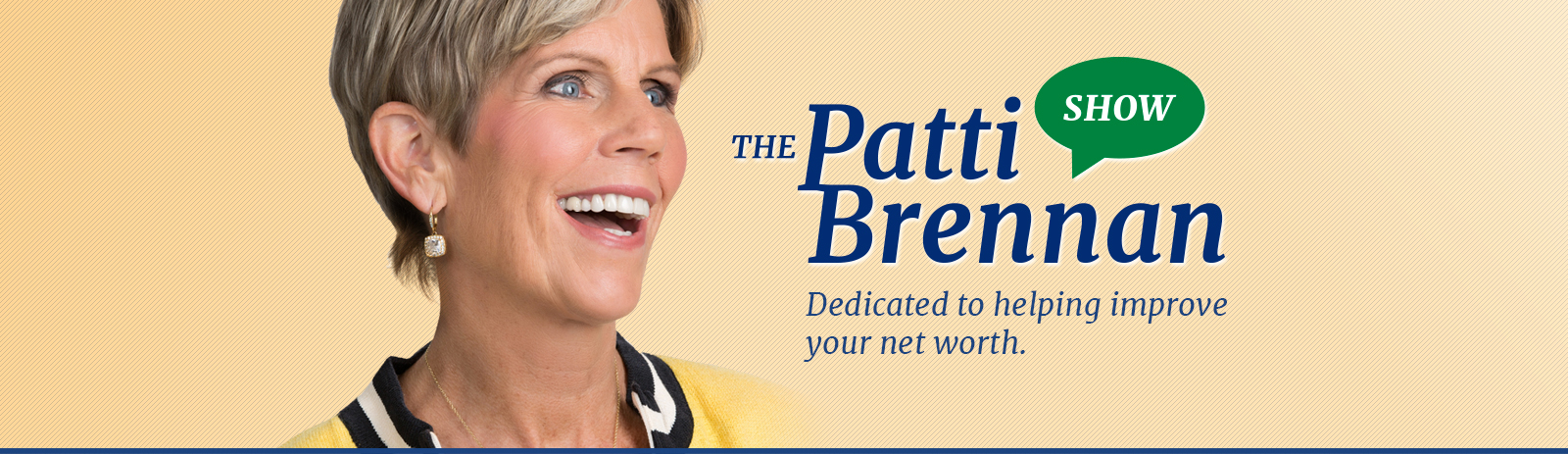
Today’s show is part one of a two-part series, where Patti invites John Nersesian of PIMCO Investment Management into the studio. John is the head of Advisor Education at PIMCO, providing advanced wealth management and planning techniques, as well as investment consulting education to financial professionals. In this episode, Patti and John discuss the importance of year end planning – how to implement various strategies and take specific opportunities that can help protect and grow your portfolio. They discuss the importance of taking those opportunities to implement fundamental strategies throughout the year – not just at year end. John provides a helpful checklist that is also available on our website to all listeners.
Subscribe to Our Newsletter to Get Podcast Updates




PBS Episode 138 Year End Planning with John Nersesian
Patti Brennan: Hi, everybody, welcome back to “The Patti Brennan Show.” Whether you have $20 or $20 million, this show is for those of you who want to protect, grow, and use your assets to live your very best lives.
I wish we had just been recording because John Nersesian and I just had an incredible conversation about quality of life in the later stages of our lives and what’s really important. We’re going to bring John back, I hope, for another show on that topic alone.
John Nersesian. You guys know he’s one of my favorite guests to have on this podcast. John is so incredibly smart, so knowledgeable about so many different areas. He’s Head of Advisor Education at PIMCO. Thank you, Dan Miller, for bringing John again to our podcast studio, and thank you for coming.
John Nersesian: Oh, it’s my pleasure. I love visiting the Philadelphia suburbs. It’s so beautiful here, and most importantly, I enjoy spending time with you, Patti, so thanks.
Patti: Thank you, John. The energy here is amazing. We feed off each other. It’s fantastic and I always learn something. What’s great about John is, he’s not kidding when he’s talking about advisor education. That’s what he does, that’s what he lives by, and we as a profession are better because of it. I could go through all of John’s designations, but what is unique about John is not only does he learn it, but he takes it to the next level by educating others, advisors like us, and there’s nobody better at it. He does the advanced private wealth management programs from the University of Chicago as well as Yale.
He’s one of the most sought-after speakers in our industry because he gets down to the nuts and bolts and says, “Here’s how you do this. Here’s what you need to look for.” It’s such a privilege to have him in our studio today. John, thank you for joining us.
John: It’s my pleasure. Thanks for having me. This is fun for me, Patti. I work with great advisors all over the country, but I really enjoy spending time with you. You and your firm, you guys get it, you understand clients.
You do a great job in providing the advice and counsel that they need, so I appreciate the opportunity to share some time with you as well.
Patti: Absolutely. Today, we are talking about year-end planning opportunities. When we were talking about this, I happened to mention year-end tax planning and John said, no, it’s not just tax planning, it’s year-end planning opportunities.
I appreciated that distinction because there’s so many things that we can do throughout the year and especially right now. John, you guys at PIMCO have a wonderful checklist that we refer to all the time, and I always go to that checklist because it’s on your website.
For those advisors who are watching or listening to this, go to PIMCO’s website, they have incredible tools and resources for those of us. Let them help you do your work and do your best work. I love this planning checklist. It’s 25 items.
Some of the things we just do throughout the year, and we know how to do, some of them are unique to right now. John, when we talk about this, are there any in particular that you would like to focus on?
John: Sure. First things first, what do you mean it’s the end of the year? How did that happen? [laughs]
Patti: I know.
John: I remember we were just celebrating the summer holidays and spending time with our families and suddenly, we’re sitting here in October and the clock is ticking. Does it seem like the year goes by more quickly as we get older in our lives? I don’t know about you. That’s the experience I have.
There’s just not as much time as we’d like to have. Maybe that’s the benefit of this approach, Patti. There are several financial strategies that we all might benefit from, but the point of the matter is that we have to know about them, and we have to implement them.
Maybe the real beauty of this checklist is not necessarily the wisdom in the strategies. Many of our viewers are going to be somewhat familiar with some of them on the list. It’s the idea that we’re implementing a methodology to make sure that we consider them, and we evaluate them, and most importantly, we put them in place between now and December 31.
Patti: 100 percent. It’s so interesting that you say that, John, because we had a firm meeting this morning. I was talking to my team. I’ve got 30 people who work here. They just take care of our clients. The thing that I’m most proud of is our generational diversity.
We’ve got tiers of people in different age groups, and everyone is a leader here. Everyone mentors someone else.
John: I love it.
Patti: That’s so important because that’s how we all grow and how we improve and make this service the best in class. One of the things I was talking about — this is off-topic guys, so bear with me.
I was explaining the difference in my nursing career — you know I used to be an ICU nurse, right? — and the difference between empathy and compassion. Empathy, in our business and many professions, is this “I understand how you feel.”
If you were my patient and I was taking caring of you and I’m at the bedside, it’s important for me to know, John, everything about you. I’ve got to know your lab work. I’ve got to know your EKG. We’ve got your rhythms. I have to understand what’s normal for you.
Dan, you might be my patient also. I’ve got to know what’s normal for you. It’s probably different than for John. Here’s the difference — the knowledge. Second is empathy is the holding the hand. “I understand you feel like crap today.” “I’m really sorry, I understand.”
John: You’re in a lot of pain.
Patti: A lot of pain. That’s important, right? The most important thing to me is when you become a flatline. OK? I’m sorry, but holding your hand is not going to save your life, John. I’ve got to know what to do in advance and more importantly I’ve got to do it. Compassion is action oriented.
That’s what I love about your approach, that’s the way PIMCO works. You guys are so smart. You have access to so much information. The way that you share it so that we can use it to improve the lives of our clients. That’s incredible. I’m so grateful.
John: Thanks, I appreciate that. I suspect that’s what makes your firm so good at what you do. We talk about this a lot across the industry. What are the two qualities an advisor needs to have to be relevant to a client? Number one is they must know their stuff.
When I flat line, I want you to know which paddles to reach for or which drugs to inject me with. That knowledge or competency is critically important to helping me make the important financial decisions in my life. Competency by itself isn’t enough, I need to know that you care about me.
The sense I get from the practice that you run and the opportunity I’ve had to get to know you, is that you do care about your clients. You’re trying to help them achieve their very best outcomes, not just to see a bigger financial statement every month, but to enjoy the fulfillment of the lives and the opportunities that they’ve been provided with.
Patti: 100 percent.
John: It’s good stuff.
Patti: It is good stuff and you’ve got to keep it real too. You are not your money to me. You’ve got a family. You’ve got things that you worry about. I don’t care how many zeros are on your balance sheet.
People have things they think about. We want to understand what they are and to the extent that we can tell them how to improve their lives or take care of it, we do it.
John: I ask people all the time, what is it that’s keeping you awake at night? Sometimes they’ll answer with a financial response but it’s generally not the money. It’s something that the money may provide or may deprive them of or that concerns them about money and its ultimate impact on their lives.
Patti: 100 percent, and the lives of the people that they love.
John: That’s what we’re here for.
Patti: Exactly. We were talking about high net worth and the thing that you and I hear often is, “I don’t want our money to ruin our kids.”
John: Yes, we’re going to talk about that someday. Listen, we’re going to get through year-end planning today because it’s October.
Patti: I love you, John.
John: People need to hear about it. I promise you we’re coming back and we’re going to…
Patti: Beautiful. Let’s do that.
John: …do a session about family governance.
Patti: I think that’s important.
John: A separate topic, but a very important one.
Patti: What’s interesting about that is that’s one of the items on your checklist.
John: It doesn’t have to be done at the end of the year, to your earlier point, but I love the idea of doing it toward the end of the year. The end of the year — stop and think about the typical family. They get together for the holidays.
I happen to reside in Naples, Florida, for part of the year. My Mom’s got a place there. My kids love to come down and get out of the cold Chicago winters. My wife’s family is down there, and my brother just built a house there. My sister just moved to Pelican Bay. We’re all together at the end of the year.
Now, we’re going to do a lot of fun things, right? We’re going to play golf and go swimming. Most importantly, it gives the family the opportunity to connect, to share stories and experiences and to share values.
This idea of maybe holding a family meeting toward the end of the year to start that process that you just referenced, of getting aligned — look, at the end of the day many families want to leave or provide their children with financial resources, but the number one thing that families often want to leave their children with are values.
What are the things that I’d like to see you inherit from me? What kind of person do I want to help to raise? We had a limited opportunity to have that influence on our kids.
A great year and planning strategy is to hold that family meeting, to have that conversation that so many families are reluctant to have, about money, about responsibility, about expectations, about values. Great time of the year to do that while the family is together.
Patti: I’ll just put this out there. We all have our priorities. When we meet with clients, “What’s most important to you?” Saving money on taxes and making sure you have a retirement income you can never outlive.
I’ve created another one related to this, and it’s 12 priorities that are unusual that go to the heart of what we’re talking about. We’ll put that on our website. If anybody is interested, you can go to our website, Keyfinancialinc.com. Ask for this checklist. It really makes you think. We all work so hard, so let’s make sure that what we’re working for is…
John: We get caught up in running really fast. What we don’t sometimes check to see is, are we running down the right path? [laughs] Where is it we’re ultimately trying to head or arrive at? I love that reorientation. What else do you have on this list that was interesting to you?
Patti: All right. I thought this was interesting. We all know managing income tax brackets, right?
John: Yeah.
Patti: We do that, right?
John: Yeah.
Patti: Everybody listening does that, or assumes that it’s being done for them. I think that’s also important, not only to manage this year’s tax bracket, but also, where are you headed?
John: I love it.
Patti: I just had a meeting with a client. She’s in a very, very low tax bracket. She came in here saying, “How about we take…?” Last year, we took a bunch of money out of her IRA, standard deduction, and paid no tax. It was awesome. This year, she wanted to do the same thing, with one distinction.
John: What was that?
Patti: She started taking social security.
John: Aaah!
Patti: The social security that she only got one payment last year, she got all 12 months. If we did what she thought we were going to do, it would make 85 percent…
John: Different outcome.
Patti: Totally different outcome. We’re outcome-oriented, let’s look ahead and make sure that’s the right thing for her.
John: I love what you’ve said. People think about taxes. I don’t mean this critically, but often we’re like, “OK, it’s December 30th. What should I do to lower my tax bill for this year?” That’s not really the objective.
What I love about your earlier comment is tax planning is often a multi-year process, not just lowering my bill this year, but looking at the total implication across a multitude of years.
The second comment I want to make on this is sometimes we use this excuse that taxes are the accountant’s job. I get it. I use an accountant to fill out my tax return. I don’t mean this critically, but what often happens is the accountants are engaged in April to tell us what happened last year. [laughs] There’s not much we can do about it at that point in time.
What I appreciate about your firm and what you folks do is you look at tax implications today. What are the strategies that make sense for me? Like receiving additional retirement income if it makes sense under my current circumstances. Current tax planning and tax awareness, not tax reporting, I think is the ultimate objective.
Patti: I think it’s also important to maybe have an extra set of trained eyes looking at the return. We get everybody’s tax return.
John: Do you do that?
Patti: Every single year. We get everybody’s tax return.
John: So much in there that can really provide interesting insights for the financial planning process.
Patti: Forensic value of that when we dig it’s just so much information. The example I gave to you earlier is we had a family. Their daughter was living in a state. She was going to school in that state. She was working. The accountant checked off a box, just a box, on the mom and dad’s tax return claiming their daughter as a dependent because she was going to school.
John: She’d always been a dependent, so they just continued to check the box like they always had.
Patti: Right. Nobody bothered to ask the question. Yet, when asked the question, we realized, “Gee, she’s earning income. She’s working part-time. She’s going to school in the same state. They’re paying out-of-state tuition.”
If she were not a dependent of mom and dad by filing her own tax return, she could get in-state tuition, and she’s getting deduction. She’s got the standard deduction, at the very least, against her own income that pays no taxes.
John: I love it.
Patti: It’s awesome.
John: Yeah.
Patti: Just check. Just double-check, have an extra set of trained eyes reviewing the tax return, even if it is done in April.
John: That’s good. I don’t mean this critically, but how many individuals, myself included, would be aware of that issue? That’s the kind of stuff that we often miss that slips through the cracks. I think that’s one of the reasons that families hire great firms like yours, is because they know that you’re paying attention to this.
You’re bringing awareness not just to the obvious financial planning decisions I must make, but you’re helping to make me aware of things that I wouldn’t even think about.
Patti: This particular example is unique. Every client is unique. I tell a client, “Every client is a snowflake.” It’s important for us to understand their life, their family, what’s happening, and keep up to date with it, to understand where those opportunities may bubble up.
John: That’s good personal care and attention.
Patti: Yeah.
John: These are the kinds of things that, throughout the year, maybe even at the end of the year, can be relevant to the families that we serve, so I love it.
Patti: You’ve got one of the things on this list that’s on my hot button, and that is funding Roth for children.
John: [laughs]
Patti: I love that idea.
John: Good. First, they have to have an earned income.
Patti: Correct.
John: Maybe the advice to a 17-year-old parent. I’ve got a couple of kids at home and they’re working as lifeguards during the summer. Maybe they’re earning income or maybe if I run my own business, I put them in the books because they have to have the earned income.
If they do, then maybe instead of spending that money on whatever teenagers spend money on, maybe instead, we encourage them to put it in the retirement account.
I’ll be honest with you. My kids weren’t crazy about the idea of taking their summer earnings [laughs] and putting it into this black hole box that they wouldn’t see for many years, so I had to sweeten the the pot. I said, “Look, you put in three, mom and dad will give you the other three.” You’re immediately ahead of the curve.
By the way, when we now compound money not for 30 years, but 35 years, that extra 5 years of compounding is hugely impactful at the end of the period.
Patti: It’s like a hockey stick, John.
John: It is.
Patti: It feels slow like it’s not really doing something, then suddenly it explodes. That’s the beauty. That’s what we get to do as parents to educate our kids. I did the same thing. I started in what most people call their laundry room, and then it was the basement.
I have four children. I made them work. I wanted them to understand, so they were working. They were filing. They knew their ABCs. Half the time, they got it wrong, but they still did it.
John: [laughs]
Patti: I wanted them to get that, and they had their Roths. I have to tell you; I am even shocked at how much money they have in their Roths.
John: That’s great. I love the fact that you started early. It’s a good thing financially. It’s also a good habit for them to develop. I promise you, Patti, my kids are now 23 and 27. My son works for Major League Baseball. My daughter works for Zoom.
On January 2nd, I kind of wait and see to see if they’re going to do it on their own, or if I must prompt them, like, “Hey, dad, is it time for us now to move the money into the retirement account?” Or, “Dad, I can’t spend that money during December. I need to make sure I’ve got the 6500 to move into my Roth.”
Something got through. [laughs] I’m not sure what I did or how I did it, but something must have seeped through the net.
Patti: You’re right. It is a habit. When it’s instilled at a young age, it gets uncomfortable if they’re not doing it. It’s like any habit.
John: I like that, a year of funding retirement accounts. Let’s make sure we take advantage of one of the freebies that the IRS is giving us. If you’re going to allow me to grow my money and to do so without taxes, I want to take advantage of it. Great item.
Patti: It’s a big deal. It sounds like it’s sort of ho-hum, everybody knows, everybody knows. Why is it such a big deal? It’s because of the compounding. The compounding on what? You’re compounding your wealth with the taxes you didn’t have to pay every single year. It’s not just once, it’s every year.
John: One of the questions that we often get, which ties into another planning consideration is, and I suspect your firm does a great job of advising your clients, I have my 401(k) either a traditional or a Roth, which one should I consider?
Now, we all know that the traditional plan gives me a deduction today, but then I must pay taxes later when distributed, but Roth account gives me the opposite. I get no deduction upfront, which may or may not be advantageous, but then I take the money out tax free later in life.
That’s one of the other important decisions that investors make. Patti, suppose I told you that there was an account that gave you both, you know which one it is?
Patti: The backdoor.
John: Almost. Backdoors are good. HSA.
Patti: All right. There you go. Oh, my goodness.
John: The health savings account, I can put the money in today and I get a deduction. The money grows without taxes, and then I take it out tax free later in life. Now, I get it. It’s only $7,700, I think is the maximum contribution this year, which may not be as substantial as some of the other decisions that we’re helping our clients make.
You know what? If the IRS is going to give me a break, I’ll take it. I will absolutely accept their generosity.
Patti: Would you agree that it’s probably an example of the only free lunch we have anymore?
John: It’s funny that you say that. There are only a couple of free lunches, I mean, very few that are part of the code. We should absolutely consider them and take advantage when appropriate. I love Roth. That’s a free lunch so to speak. I love this idea of the HSA, that makes a lot of sense to me.
I love the donor-advised fund because money that I put in gets to grow tax free, annual gifting. These are embedded opportunities within the tax code. It doesn’t require me to take more risk with my portfolio, it doesn’t require me to be right on the timing of getting into or out of the market. The return or the benefit that I enjoy is simply embedded as part of the structure. It is, to use your words, a freebie that I should absolutely consider.
Patti: It’s so interesting. For those of you who are listening and watching, stay tuned because John and I are going to do another podcast specifically on charitable giving. What is phenomenal, what I love about John is, he put together a chart to show how you can do charitable giving and get a bigger bang out of your buck, a much bigger bang. We’re going to do that next. Stay tuned.
John: Actually, we’re going to tell all your clients to give your money away. That’s not what we’re talking about. [laughs]
Patti: No, no, no. If that’s in your heart, if that’s something you want to do, let’s optimize.
John: Here’s the reality, Patti. People are already giving. I know your clients are very charitable. There are things in this world they care about beyond their own needs. The purpose of the conversation is not about giving away all their money like I was teasing about early. It’s about making the giving that you’re already doing more beneficial and more impactful for yourself and for the recipient organizations.
Patti: Absolutely. 100 percent. That’s great. Let me just look at a couple of other things. Review your elections for Social Security and Medicare.
John: By the way, can we talk about Medicare for a sec?
Patti: Please.
John: I am so confused by Medicare. By the way, don’t let my youthful appearance dissuade you. I just turned 65. At 65, what do I have to do? I must elect Medicare. What a confusing process that was.
Patti: It is awful.
John: Is that something that…
Patti: We do.
John: Oh, I should have called you.
Patti: Oh, we have one person who’s here who is the expert, who basically goes online, navigates the system.
John: I love it.
Patti: …as well for the supplemental.
John: Every time I turn the TV on, I see another commercial for Medicare Advantage, Medicare supplement. It is so confusing. If it’s confusing to me, I would imagine it’s confusing to a lot of your viewers and listeners as well. As I mentioned, I just turned 65. I just had my right hip replaced. Anybody want to guess the cost of a new hip in Naples, Florida?
Patti: Oh, I cannot even imagine.
John: The gross number. Anybody got a guess?
Patti: $110.
John: It wasn’t quite that high. It was up there. It was $97,000.
Patti: Wow.
John: Of course, since I’m 65 when I had it done, my out-of-pocket cost was…guess. The number was zero. I paid nothing because of the Medicare coverage. The truth of the matter is I didn’t really need a new hip. I just had the surgery done so I could get a return on all the Medicare premiums I’ve been paying for four years.
Patti: [laughs] Oh, my goodness.
John: Thought I’d take advantage of the system a little bit.
Patti: Well, you seem to be walking great.
John: I haven’t played pickleball or golf yet, but…
Patti: Oh. How long has it been?
John: It’s been four weeks. How am I doing?
Patti: Are you kidding me? Four weeks?
John: I haven’t fallen over yet.
Patti: Wow, wow, wow. Amazing.
John: Well, that’s the surgery today. If anybody needs, I’m not advocating medical procedures here, but my understanding is hips are easier than knees and shoulders.
Patti: OK, interesting.
John: There’s the positive…
Patti: …they’re not going through the muscle anymore.
John: Correct, that used to be posterior. Now they’re doing what’s called anterior through the front. It’s a harder procedure, but for the doctor to perform because it’s smaller, more difficult…
Patti: Yeah, window.
John: …area to operate, exactly, but there’s less muscle cutting, and the recovery period is a lot quicker.
Patti: Wow, fascinating. We’ve got some healthcare planning; we’ve got some retirement planning…
John: Can we stay on retirement for a sec?
Patti: Love it. Do it.
John: This is something they must do by the end of the year. Some of these things are optional. Sounds like a good idea, maybe it fits my situation, maybe it doesn’t. If you are 73, what are you required to do?
Patti: Required minimum distribution.
John: Patti, if you don’t make that distribution because you’re sleeping at the switch, the penalties are significant.
Patti: Big time.
John: It used to be 50 percent, Secure 2.0 lowered the hit to 25 percent, but that’s still a very egregious number. Now, if you’re going to make the RMDs, because you’re over that age, and if you are charitably inclined, another year-end opportunity is you put the two together into something called the QCD. Have you had clients who have taken advantage of that?
Patti: We set it up, we talk about it in January…
John: I love it.
Patti: It’s an automatic.
John: I love it, I love it.
Patti: Because it’s so much more effective. First, they feel really good about it. It’s automatic. It goes directly to the charity of their choice, and they have to take the money out anyway, it’s a way of not having to pay the tax on.
John: Stop and think about this. I’m 75 years old. By definition, I have to take the money out. During the year, I’m writing checks to charity because I’m charitably inclined, and I give money to those who ask for it or want it. If I put the two together, I achieve a better outcome. For many clients, that charitable check that they’re writing is not deductible.
Remember, you only get a deduction, not when you write a check. You only get one if you are itemizing your deductions on your tax return. If I’m not itemizing, but on the other hand, I’m taking these RMDs from my retirement account, I’m paying tax here but not getting a deduction here. I can negate those effects by putting the two together in a two-seater.
Patti: It’s powerful.
John: Yeah, it is.
Patti: Talk about a multiplier effect, and the charity is benefiting. I think that is great advice, great news.
John: It’s a good one.
Patti: Something that if that question needs to be asked for anybody who’s of the age of doing required minimum distribution.
John: Love it.
Patti: Honestly, that’s where getting everybody’s tax return comes in handy. Because it bubbles that opportunity up to us. We’re looking at it.
John: Right, when you’re examining the tax return, you see that they made a charitable contribution. You see that they had an RMD during the year. There’s so much to be gleaned from the tax return. I’m glad that you….
Patti: Yeah, 100 percent.
John: …pay attention to that.
Patti: 100 percent. Consider advanced estate planning options because this is really a hot button.
John: Is it?
Patti: It’s a hot button for our clients because everybody’s worried about the sunset.
John: I thought people were not worried, because, oh my gosh, the government made the number much bigger, it’s $13 million today, who’s worried. But I love the fact that you’re looking ahead a little bit.
Patti: The people who need to worry are worried. They recognize that, “OK, well, we may not have an issue today, and we don’t know whether or not they’ll have an issue in the future. Is there anything that we can do today to nip things in the bud, no matter what happens in the future?” That’s where good planning comes into play.
Whether people do it or not is totally up to them. To run the numbers and run the projections, what if we get a sunset? What does your estate look like? What are the taxes? What does that mean for your family? To me, it’s always boiling down to your family.
John: I agree.
Patti: Is there anything that we can do today to preserve what we have today, which is $13 million per person? The answer’s yes.
John: Yeah, there are things we can do. Thinking about this, we spend so much time and energy wondering, Is Apple going to go up this week or down next week? That has an implication of a few dollars. Think about the estate tax and the time and the energy that we spend addressing that. That implication is significantly greater.
Let’s devote our energies and our time, and our efforts to the things that will move the needle in our financial lives. I know a lot of folks have been seduced into thinking, “Oh, I don’t have to worry about this right now.” The laws are different. Well, I have three questions, all rhetorical.
Number one is, when do you plan on dying? [laughs] Number two is, how much do you think you’ll have at that point in time? Third, what do you think the estate tax number will be?
Then we begin to realize that there are a lot of things that I don’t know, but what I do know is that the number today is the highest it’s ever been in history. A $13 million exemption, and I know that smart people like you can give me some suggestions that will help me to lower that bite. I love it.
Patti: I think it is important, again, just to ask the questions. Is there a hedge? You win tails, you break-even type of situation. Even if the law doesn’t change, if we can come up with some strategies that aren’t going to impact your life while you’re alive, let’s at least have that conversation.
John: I’ll give you one that is very suitable for the end of the year since that’s the topic we’re on. How about annual gifting? Part of the code says, I can give $17,000 a year to anybody I want, including the five people in this room.
Patti: Thank you.
John: Don’t hold your breath.
[laughter]
John: I can give 17,000 bucks a year, and it doesn’t have any income tax liability, it doesn’t have any gift tax liability, it doesn’t have any estate tax issues, it’s a freebie. It’s part of the code.
Patti: You don’t even have to file anything.
John: Nothing. It’s either use it or lose it. I got between now and December 31 to make those gifts to my children and their spouses and my grandchildren, and I can shift significant dollars from my taxable estate to those people that I wanted to ultimately go to. There are no negative implications in the process.
Patti: Here’s a question for you, John. What about that client who says, “I don’t know if I want them to have it now.” What would be plan B?
John: Sure. The two obstacles I hear are, I might need the money. If the client believes that that might be money that they need, I get it. I would never want them to cause additional stress or anxiety about financial resources, and so maybe now’s not the right time to make that shift. If they don’t want the kids to get the money now, we can use trusts.
We can still control the investment and the distribution of those dollars while removing them from our taxable estate and deriving the benefits that you and I have been discussing.
Patti: Another way of doing that is for grandchildren to do the 529.
John: 529s.
Patti: Do five years all in one pop, get that money in there, growing tax free for high school up to $10,000 a year.
John: There’s another one of the freebies that we need to add to our list. We’ve been talking about these embedded advantages.
Patti: It’s a form of a gift and it’s a way of A, lowering your estate, B, saving income taxes and benefiting someone that you love.
John: I love it.
Patti: It’s a home run, it’s not just a triple, it’s a home run.
John: I agree.
Patti: Things like that, again, understanding what’s important to the family, that’s a low-hanging fruit. Easy one depending on the estate people who are worried about this, that might be a viable strategy.
John: I love your methodology. Sometimes in the industry, we’re so anxious to provide the very best financial counsel to the clients we serve. Sometimes we make it too complicated too quickly. I would like to start with what is the easiest path to success and let’s start there first.
Then if that solves the problem, great, and if it doesn’t, then we can move on to B, C and D. For me, annual gifting before I get into GRATs or family partnerships or other more esoteric strategies, I like to start with the obvious ones that maybe provide a significant benefit with little effort or risk.
Patti: To your point about the Apple example, we can’t control what Apple’s going to do.
John: Oh, you can’t? [laughs]
Patti: I wish I could, John, but I don’t know, but this is something we can control. You just understand it, run some numbers, and figure out. To your point, put your toe in the water. Start small, get comfortable, understand the implications, and then see what happens.
John: I like that idea.
Patti: Let’s see. What else do we have here? So many good ideas.
John: I got one for you that we must hit before we end our chat today and I’ll talk about anything you want. One of the obvious ones toward the end of the year is, OK, John, I’ve had some gains that I realized during the year, what do I do about them?
Now, if the client had losses from prior years that they can use to offset the gains, maybe we don’t do anything. We leave them alone and we let one offset the other. Maybe if the clients in a lower marginal bracket this year, maybe we take those gains because remember ordinary income rates at 37, maximum capital gain rate is 20.
I like the lower capital gain rates when they’re available to me, but one of the obvious planning strategies at the end year is to sit down with your advisor and look what has happened, what gains have I realized, what losses have I realized, and then maybe to match them up.
I use short-term gains against short-term losses. I then move on to long-term property, long-term gains against losses, and then I put the two together. Losses can be used dollar for dollar to offset my gains.
That not only saves me current tax dollars, but it lowers my adjusted gross income, which means that my social security’s tax to a lesser degree, which means that maybe I don’t creep into a marginal bracket that’s a little bit higher. That means I save the QBI deduction if I’m a closely held business. There are lots of good things about offsetting those gains.
Patti: The medical deductions on Schedule A.
John: Are you kidding?
Patti: There is another one.
John: Seven and a half percent of AGI, so I can have all my hips replaced, all 17 of them. [laughs]
Patti: There you go. Oh my God.
John: I’m not going to get over seven-point half percent of AGI probably, but if you can help me manage my income, there are a lot of ancillary benefits that I might enjoy
Patti: The modeling and the projections are also important. Using that other example, maybe that client had capital gains. She’s getting social security, etc., what’s the impact of taking those gains in a year when she’s in a very low-tax bracket? Just take her up to the tippy top of the 12 percent tax bracket.
John: I love it.
Patti: She doesn’t pay any tax on her gains and if she likes the investment, we buy it back.
John: I did the same thing for my daughter a couple of years ago when she graduated from TCU, so she’s graduating in June and my wife, and I decided we were going to buy her a car. I could have found the resources from different financial instruments, but I decided instead to give her what was it? 30,000 or $32,000 of UnitedHealthcare stock.
My cost basis was 12 bucks. The stock was 500. I had a big gain in there. By shifting the property to her, to your point, she paid zero tax on the realized gain.
Patti: Brilliant.
John: It was brilliant. [laughs] I liked the idea of giving her a gift, but doing so in a way that was advantageous, a win-win, beneficial to us and beneficial to her. To your point, let’s look at what that marginal bracket is on the realized capital gains. Maybe we’ve realized losses to offset them.
As you know, I can use $3,000 against ordinary income. Any losses above that amount get carried forward indefinitely so that I can use in future years.
Patti: It’s also important for people listening and watching, John, that we also want to keep in mind the age of our clients because as our clients get older in their 80s, and people are living longer, here’s the thing, we have to be cognizant of the fact that, on a regular account, non-retirement account, you get this thing called a step up in basis.
John: It’s nice.
Patti: That’s good news. However, if mom or dad has losses as they probably did last year, it would also step down. You do not want mom and dad to have those losses and not use them because they can’t be transferred at death.
John: That’s right. You never transfer the loss. You can transfer gains and get them stepped up in basis. I’m better off booking the loss, deriving some tax benefit from it, and then gifting that property away or leaving it behind if that’s my intent.
Patti: I always have to look this stuff up, John, if I don’t know the answer.
John: Me too.
Patti: I don’t know that you’ll know the answer, but in the year a client passes away, if they have a carry-forward loss, can they carry-forward that into the estate income tax return and then take gains so that the…Guys, disregard that question. This is where we get into the weeds. I’ll look it up. It’s a very unusual situation.
John: Generally speaking, though, I like your general advice, which is to understand what provisions exist beyond your demise and which ones don’t. For example, if I get an AMT credit because I exercise some incentive stock options, I get a credit that I can use in future years, but that credit dies with me.
Understanding these different tax implications while I’m alive today but maybe even a little bit later on in life, doing that planning at that later stage becomes critically important.
One other thing on that front around gains and losses, as people are booking losses for tax benefit that we just discussed, make sure you’re cognizant of the wash-sale rule.
That’s that 61-day window, 30 days before, 30 days after. If I have Zoom stock that’s down from 200 to 65 and I want to book the loss because Patti told me it was a really good idea to do it, I can’t sell the stock today and buy it back next week, that would disallow the loss.
What I can do is sell it and then wait to rebuy it. I can double up on it today and then sell the original 31 days later, or I can sell the stock and replace it with something similar but not identical. All three of those approaches would allow me to derive the loss that I’m looking for without violating that wash-sale rule.
Patti: It’s interesting because it sounds like, why would I want the loss. People say, I don’t want to sell low.
John: I don’t want the loss, but I have it, it’s there. [laughs]
Patti: Correct. You might as well make some lemonade out of this lemon.
John: I like that idea. If it’s a stock that you believe is going to rebound in price, once again, maybe I double up and then sell the original. I still have the same position that I had before, but I’m still exposed to it if that rebound does occur. I like that idea.
Patti: Very much so. Let’s get something real simple. Something that people, I don’t know about you, John, I find people forget about.
John: I forget everything.
Patti: It’s important and it’s on our little checklist. Reviewing beneficiary designations.
John: Now, why is that important, Patti? Who cares? I’ll be dead by then. Who do I care about who gets my money when I’m not here?
Patti: It’s amazing how often this comes up. When we’re meeting, especially with new clients, we review statements or we review things, and we say, “Your beneficiary designation is your ex.” They’re like, “Is it really?”
John: [laughs] They forgot who they put down on the form?
Patti: They forgot and when the divorce came through, etc. We had a situation where, and again, this is an unusual situation, husband and wife got divorced, but they still wanted their ex to be the beneficiary.
John: I love it.
Patti: The problem is they really should put in a new beneficiary designation because the firm, the holding company, what have you, the custodian may deny that because they were divorced.
John: Oh, interesting. I didn’t realize that distinction was made.
Patti: It’s always a good idea when there’s a change in relationships, what have you, just update your beneficiary designations, update your will, do all that stuff.
John: There’s one other item on the beneficiary checklist. Once again, this is tedious stuff…There are more fun things for us to do with our time.
Let’s go play golf instead, or let’s go out for a nice dinner together. We want to review my beneficiary designations. This is why we have great partners to help us in these endeavors. There’s one other area where beneficiary choices become critically important.
I like your examples, but how about this one? There’s a new rule called the 10-year non-spousal rule that says that if I leave my money, not to my spouse, but maybe my three kids, there’s a new rule that says if they’re not my spouse, they’ve got to distribute the money within 10 years. The question is, do I leave that money equally to all three? Maybe one’s older, one’s younger.
Maybe one’s at a higher marginal bracket, one’s at a much lower bracket. How do I now begin to rethink the distribution of my assets via beneficiaries to produce the best outcome for all involved? As you and I discussed earlier, being fair to your kids doesn’t always mean being equal.
Maybe there are certain advantages of restructuring your beneficiary choices for a better outcome for everybody.
Patti: 100 percent, and to really understand the needs of the kids in terms of what you’re trying to accomplish, and to remember that it’s not controlled by your will. It’s not controlled by your revocable trust. It’s the beneficiary designation, so important. John, I could talk to you all day.
John: OK. I got time. Come on. [laughs]
Patti: We are going to talk again with another podcast for those of you who are watching and listening, stay tuned, John’s going to join me again for some powerful ideas in the charitable giving area.
It’s incredible, the things that he’s bubbled up for all of us, and what a difference it can make for the charities that you believe in, that you want to support.
Thank you for joining me. Thank you, John, so much.
John: My pleasure.
Patti: The ideas, the energy. I love the way you approach things. Thank you for making such a difference in our profession.
John: Thank you too, Patti. I appreciate it.
Patti: Alrighty. Thank you, Dan Miller, from PIMCO. Thank you for supporting us. To all of you, if you have any questions, if you’d like to learn more, go to our website, www.keyfinancialinc.com. Ask us a question, request one of these checklists. We got a ton of checklists. They’re there for you.
Patti: I appreciate your time so much. I’m Patti Brennan with Key Financial, wealth management with wisdom and care.