Ep. 210 – Mid-Year Economic Outlook with Brad Everett
About This Episode
We are halfway through 2026, and a lot has happened. A geopolitical conflict that shifted oil prices. A Federal Reserve that has gone quiet. A stock market that has climbed to new highs while the companies everyone was watching have largely gone sideways.
In this episode, Patti sits down with Key Financial Chief Investment Officer Brad Everett for their mid-year check-in. They look back at what they got right, what changed, and what the next six months may look like for investors.
Subscribe to Our Newsletter to Get Podcast Updates




Editorial note: This transcript has been edited for clarity and readability by AI. Filler words, repetitions, and informal speech patterns have been cleaned up while preserving Patti’s original voice and meaning.
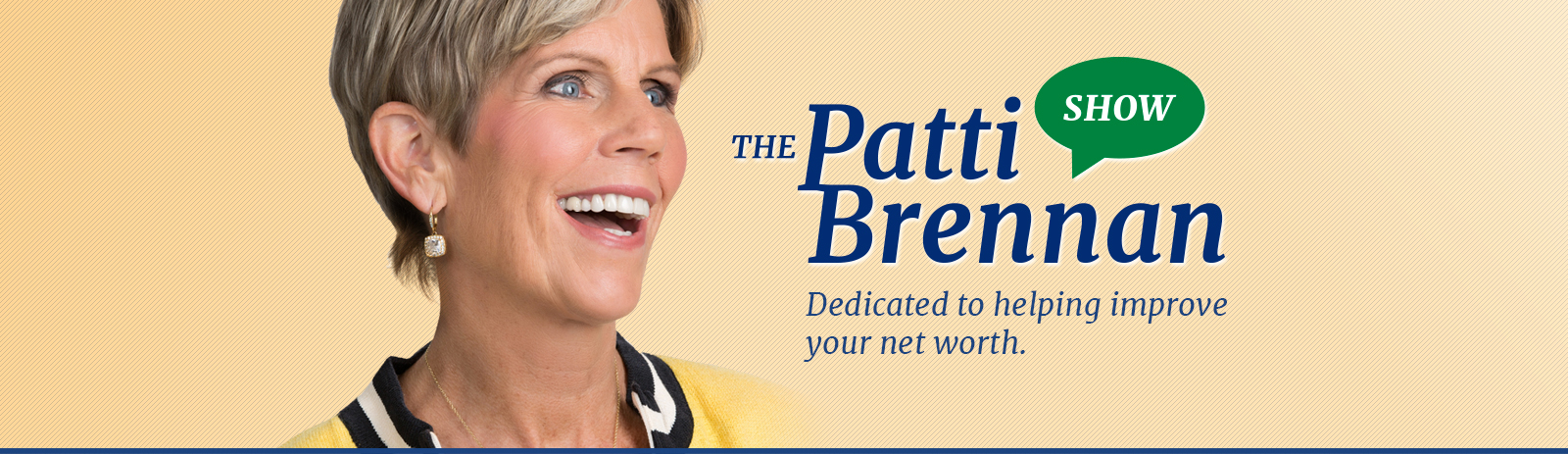
Patti: Hi everybody, welcome to the Patti Brennan Show. Whether you have $20 or $20 million, this show is for those of you who want to protect, grow, and use your assets to live your very best lives. Welcome to our mid-year outlook. Joining me today is Brad Everett, our Chief Investment Officer. As many of you know, I like to hold ourselves accountable, and this has been a very interesting year. Brad, thank you so much for joining me.
Brad: Thanks, Patti. Always love talking about this stuff.
Patti: We are long-term investors. We do real financial planning. Six months is not exactly long-term, but we are realistic, and we understand that many of you are reading headlines and sometimes that can be unsettling, especially heading into a midterm election. Let’s talk about what we expected at the start of the year and where things actually stand today.
The Iran Conflict and Oil Prices
Patti: In January, we had no idea we were going to be dealing with a conflict of this scale by mid-year. Oil was running around $60 to $65 a barrel at the start of the year. It climbed as high as $110 and has since come back down. The Iran situation has been a real market mover. Brad, what have you observed?
Brad: Oil is back to roughly where it was in early March, around $80 a barrel. What was interesting is that the market was extremely reactive early on, moving sharply with every announcement about whether a deal was near or tensions were escalating. But after the same signals were repeated dozens of times, the market started to tune it out. It is largely ignoring the noise at this point and waiting for something concrete.
Patti: It is easy for markets to ignore, but households are feeling it directly. Filling up a tank can cost $80 depending on the car you drive. That is real money.
Brad: There are really two groups being affected differently: stockholders and oil producers on one side, and everyday consumers on the other. As a net oil exporter, the U.S. economy as a whole may benefit from higher prices, but that does not make it easier for families at the pump. One thing worth noting: households currently hold a record percentage of their net worth in equities. The wealth effect is real. When markets move, people feel it.
Is the Market Too Big to Fail?
Patti: With so much of household wealth tied to the market, it raises a real question: is the stock market too big to fail? If the market dropped 40%, retirees would be deeply affected, and that has political consequences.
Brad: There is a structural argument for resilience. 401(k) contributions create a built-in buying force, with an entire country effectively dollar-cost averaging into the market every two weeks. That does not eliminate the risk of short-term shocks, but it does create a persistent floor of demand. And according to research from DataTrack, the U.S. has only been in recession for two months in the last 15 years. That is remarkable for an economy of this size.
Patti: That resilience is part of why the U.S. stock market remains what many call the cleanest dirty shirt in the closet. But this year, we are also seeing diversification actually pay off. The Mag Seven has underperformed significantly, while the other 493 companies in the S&P 500 have carried the index.
The Mag Seven Becomes the Lag Seven
Brad: The Mag Seven is essentially flat or slightly negative for the year, while the S&P 493 is up over 15%. The concentration that made a lot of people nervous at the start of the year has begun to diminish. The top ten companies were at roughly 42 to 43% of the S&P earlier this year. That has come down as earnings from the broader market have justified higher multiples.
Patti: We called this at the start of the year. We were concerned about concentration and encouraged clients to stay diversified and stay the course. The principles of sound money management have come through. Ed Yardeni coined the term “Lag Seven,” and it fits. These companies are now issuing debt to fund their AI infrastructure buildout, which is a meaningful shift. The good news is that other companies are benefiting from those investments, which is contributing to the healthy broadening we are seeing.
Brad: And that matters, because when companies issue debt, the stakes get higher. They have to choose productive, profitable projects. But what is different from 1999 and 2000 is that the earnings underlying these valuations are real. This spending has largely come out of free cash flow, not speculative equity issuance. The AI bubble concern is understandable, but the fundamentals look very different from the dot-com era.
GDP, Labor, and the Productivity Equation
Patti: Brad, help us understand what is actually driving economic growth right now. Can you break down GDP and the two main factors that influence it?
Brad: In the simplest terms, GDP growth equals productivity growth plus workforce growth. Right now, we have a demographic challenge. More people are retiring than entering the workforce, and the Fed projects labor force growth of only about a quarter of a percent per year. Immigration, which has historically been a meaningful source of labor supply, has declined significantly. That is a real constraint on growth.
Patti: We are a service-based economy. We need people. Investing in productivity through AI is important, but it is not a substitute for labor. And there is something striking happening with young workers right now: unemployment among recent college graduates is at record highs. Companies appear to be making short-term decisions, not hiring and training new talent because they want results in the next quarter.
Brad: Slower to hire, slower to fire. We are still managing to grow at around 2 to 2.5% annually, which is solid. But reaching the 3.5 to 4% growth rates we saw in earlier decades requires both productivity and workforce growth happening simultaneously. Right now, we are leaning heavily on one leg of that equation.
Inflation, the Fed, and Interest Rates
Patti: We have a new Federal Reserve Chair who is less inclined to telegraph the Fed’s intentions than his predecessors. Inflation has been choppy. CPI surprised everyone by coming in lower recently, but that was before the latest escalation in the Iran conflict. If oil prices rise again, inflation may follow. What do you think the Fed does from here?
Brad: At the start of the year, the market was pricing in two rate cuts. That now looks unlikely. The Fed has essentially paused, and staying neutral is probably the highest-probability outcome. If the Iran conflict resolves and oil drops, that changes the calculus. Housing costs, which have been a significant driver of past inflation readings, have been on a steady decline, which helps. But for now, the Fed’s most likely move is to do nothing. And sometimes the best thing to do is nothing.
Patti: We have PTSD from 2022. After COVID, everyone is laser-focused on inflation, and rightly so. Staying neutral, holding rates where they are, is probably the right call given the uncertainty around the conflict.
What This Means for Your Portfolio
Patti: Despite all of this uncertainty, the market has climbed to new highs. Valuations are actually healthier than they were at the start of the year. What should investors be thinking about right now?
Brad: There are real reasons to be optimistic across asset classes. Bonds are offering yields of 4.5 to 4.7%, which is meaningful. If rates stay flat or decline even slightly, you could see 8 to 9% returns on the aggregate bond index. International equities look attractively valued. Small caps have been strong. The case for diversification is better today than it has been in years.
Patti: We are not buying bonds because we think returns are going to be spectacular. We are matching assets to when clients need the money. If you have a near-term cash need, you should not be in stocks for that money. Bonds serve a specific purpose for a specific time horizon. The beauty of disciplined asset allocation is the ongoing rebalancing process. Small caps have been on a tear, so when we want to sell high, those gains can replenish what was drawn from the portfolio. That nipping and tucking adds to your internal rate of return over time.
Brad: We cannot predict what happens next. What we can do is build a portfolio we would be comfortable with if markets go up 20%, down 20%, or go sideways. Scenario planning is a core part of how we manage through uncertainty.
Three Key Takeaways for the Second Half of 2026
Patti: Let’s close with your three takeaways for the second half of the year.
Brad: First, diversification. It should not feel like a punishment anymore. Bonds are productive, international equities are attractively valued, and the broadening of the market beyond the Mag Seven is a healthy development. Second, keep watching Iran. If the conflict escalates, it could push oil higher, reignite inflation, and force the Fed’s hand in a direction nobody wants. There are real portfolio implications depending on how that plays out. Third, think in scenarios. What does your portfolio look like if markets drop 20%? If they go flat? If they surge? We want a portfolio that can hold up across all of those situations, not just the optimistic one.
Patti: A resilient portfolio protects and grows assets so that when clients need the money, it is there. We do not know exactly what the second half brings. What we can tell you is that we are prepared, we are watching, and September and October may get bumpy as election rhetoric heats up. Stay the course. We will do this again in January 2027 with a full-year review. Thank you so much, Brad, and thank you all for tuning in. Take care.