Ep 179 Part 1:Who We Let in the Room – How We Vet the Professionals Behind Your Portfolio
About This Episode
In this episode, Patti Brennan sits down with Lee Cohen, Advisor Consultant at New York Life, to pull back the curtain on how financial professionals are selected, evaluated, and trusted to help guide your financial future.
From one small trade to a full-fledged partnership, Patti and Lee walk through the exact moment their professional relationship began—and the standards that must be met before anyone is brought into the fold. You’ll learn why Key Financial vets every firm behind the scenes, how “wholesalers” are evolving into true advisor consultants, and how these unseen partnerships quietly shape your portfolio’s performance.
Subscribe to Our Newsletter to Get Podcast Updates




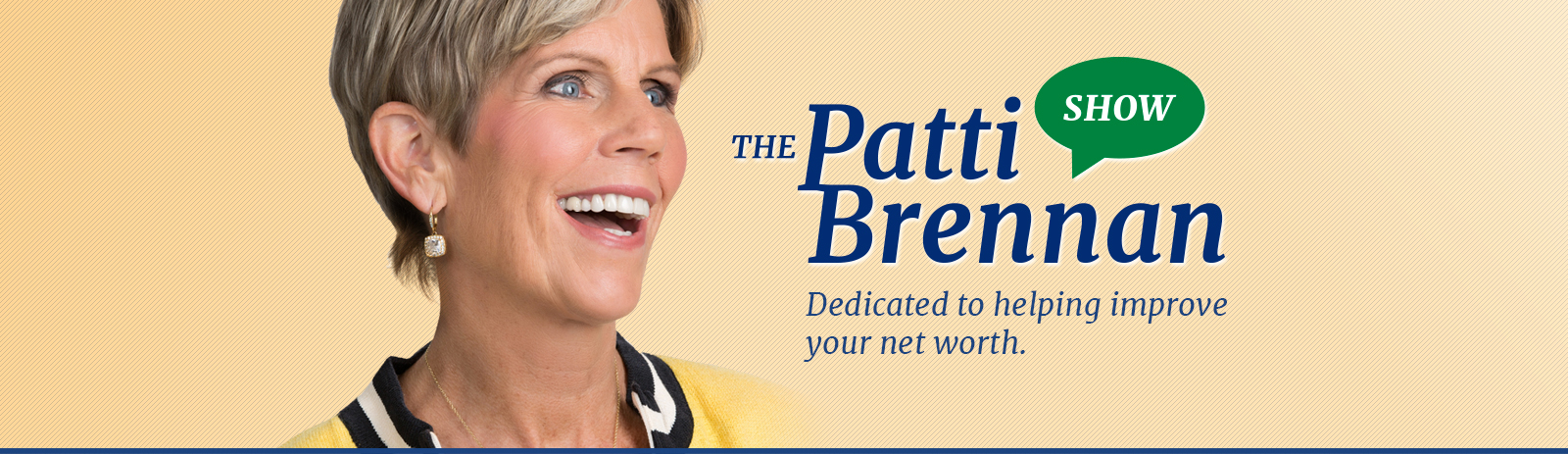
The Patti Brennan Show
Ep. 179 Part 1 – Who We Let in the Room: How we vet the professionals behind your portfolio ft. Lee Cohen, NY Life
Patti: Hi everybody. Welcome to The Patti Brennan Show. Whether you have $20 or $20
million or even $200 million, this show is for those of you who want to protect, grow, and
use your assets to live your very best lives. I’m really excited about today’s podcast because
with me is Lee Cohen. Lee Cohen is probably one of the best wholesalers that we work with.
He is with New York Life Investments. And basically, what we’re going to do today is
introduce Lee and really talk about the relationship that we have with New York Life
Investments and Lee—and also what it really means to all of you who are listening and
watching our podcast today.
Lee, welcome to the show.
Lee: I appreciate you having me. Thank you so much.
Patti: Excellent. So, let’s start out by setting the table. Obviously, there are a lot of financial
advisors who listen to the show, but also clients and people who may not be in the industry.
So how about we start out with: What does a wholesaler do? And what is the relationship
between a wholesaler and a financial advisor?
Lee: Sure. This is a great start. I think the financial services industry knows us as
wholesalers. All these different investment firms have folks like myself whose job is to go
out and build the brand of our product set for the advisor community. Whether it’s a mutual
fund, an ETF, or anything in between, it’s my job to represent my company’s products and
present them to financial advisors.
Now, at our firm, we go by “advisor consultants” because we take a more consultative
approach. I don’t like to just push a product in someone’s face. I want to get to know the
advisor, understand their process, the needs of their clients, and their firm’s goals and
objectives. I usually ask more questions than I do selling, which helps me help you—and in
turn helps your clients.
Patti: 100%, and that is exactly what you have done. Folks, we get calls from wholesalers all
day long. Every day. I go to conferences, and they’re all out there. They kind of know us, and
since we’re a very large firm, everybody wants to come into our office and pitch their
products.
Our job is to dig in and figure out who the best and brightest in the industry are—before we
even consider adding a product to our client portfolios. So Lee, why don’t you tell the story
of how we first got connected?
Lee: Absolutely. It’s a story I tell a lot. It just goes to show how timing, luck, and persistence
all come together. When I first started supporting Osaic, which you work with, I saw a trade
come in from your firm using one of our products. I sent a quick introductory email
introducing myself as your advisor consultant. I appreciated the support and wanted to get
to know you and your practice.
I received an email back from Brad Everett, your CIO, who said he’d love to meet. We had a
great meeting where we updated him on our strategies. At that time, I didn’t really get the
full sense of who Patti Brennan was. But after that meeting, I thought, “Patti’s pretty good at
this business.”
I went back to my senior leadership team and said, “I met with Patti Brennan.” One of them
said, “You met with Patti Brennan? Whoa.” That made me realize you had quite the
reputation. I knew then that I wanted to bring value beyond just product. People build
relationships, not products.
Patti: You know, if I can interrupt you, if it’s it’s wild, because the trade that
you saw was one trade! We do, oh, my goodness, hundreds of 1000s of
trades every single year. It was one trade that we made for one client
because we wanted to take advantage of a tax loss. So we were doing an
exchange from one convertible bond fund to another, and Brad had done
some objective research, and decided that your fund was the fund we
wanted to move that client into, right? But it was one client, one fund, not a
lot of money, and yet you saw it, and you thought, boy, this is somebody
that we’d like to get to know better. And then you spoke to senior
management, one thing led to another!
Lee: I just remember the journey over the last year, which I think is the
exciting part, right? We’ve done a lot in the last 12 months in terms of
supporting your practice, by doing things with our advisor, advancement
Institute, to help get to the goals and objectives you want, but everything
from relationship building games going to the Phillies game together, you
know, just the journey of just what I think is important about this business
is, not only do you need a good product set, but you need people that you
could work with, that you like, that you could trust. And I think that really
resonated in terms of how you and I worked together. Because I feel like
we clicked very well as a firm. And also it was one of those things where
you look back and you say, The last year has been a really good one,
because we’ve built such a strong relationship. And I think with sales, and I
think we all agree there isn’t a sale unless there’s a trust in a relationship.
So I love that we’ve built that over the last, you know, 12 months.
Patti: You know, it’s interesting because you brought up that program that
you guys have, and as part of that, Kevin Elko came into our office and
spoke to my team, and then I did my team. And during that meeting, we did
this game together, remember? And it was “what is the one word?” What
is, what is your one word for the year, and so we all figured out a word,
and my word was clarity. So my team literally made me a bracelet. Because
sometimes, even though I think I’m being clear with everybody, they
thought that I should probably be a little bit clearer. And so that was really
interesting to me, something that I didn’t realize they wanted to hear more
about. So in the summer, I put together my succession plan. I I pulled the
team together, I told them what the plan is, and then I wrote a letter to all
of our clients. Because, you know what? It’s, what it was, one of those
things where, you know, people see the wrinkles in my forehead, and by
the way, I’ve earned every single one of them, and they’re staying, by the
way, and you know, they probably didn’t want to ask necessarily they
didn’t want to be tacky, like, ‘hey Patti. You know, you’re looking pretty old
these days. What are you going to do?’ So I thought I would go out up front
and send a letter to all of our clients that you may or may or may not be
wondering what my plans are. I have no need to retire. I have no plan to
retire, but if I did get hit by that bus? Here’s what would happen, and I laid
it out for them. Do you know Lee? I got so much feedback from that client
letter. They loved it. They appreciated the transparency, the honesty and
the fact that I just gave it to them straight. I was clear, and so that word of
the year, clarity that I wear on my wrist now came from that meeting that
New York Life investments did for us. I love it.
Lee: And you’re not the only person that’s worried about just the clarity of
the business, right and succession planning alone. I mean, I think that’s one
of the biggest things that we see in financial services. Is if you look back 30
years ago and you took the average age of an advisor 30 years ago, and you
look at the average age now, it’s a very similar age, right? Because a lot of
it’s a very tough business, and a lot of the same faces stay in this business
for so long. So I think as clients get older, as their children get older, they
say, Well, what is our succession plan with our money? Right? So we’re in
the same boat where we want to try to talk to advisors. I’m glad you were
proactive with it, because I think it’s something that a lot of other folks
need to start considering. Is what is their game plan, where, not only if
they have an exit strategy, where they know they want to retire in 10
years, but things also happen out of our control. What if a person needs
their new advisor tomorrow for unforeseen circumstances?
Patti: I’m glad you’re prepared for it, because it’s something that’s very
important in this business. You didn’t necessarily know that the My word
was going to be clarity. You didn’t know that it would translate into the
succession plan and how I would be as transparent as I ended up being. It
just is one of those things where an idea can lead to something so much
bigger and better, and that is the beauty of the relationship. So I’m kind of
curious, when you’ve been at advisory firms all over the country, you’ve
been doing this a while. You’ve seen the best, the brightest, et cetera. Like,
how do you tailor your support and resources to the different styles and
needs of the advisors? Because, I mean, honestly, I’ve got a very deep
bench, right? We have here something that a lot of firms don’t have, and
it’s just something that has happened. We have generational diversity,
right, right, right, which is, you know, and it’s just kind of worked out. So,
you’ve got me and a couple others who are kind of the senior leaders, and
then you’ve got the 40-year-olds, sure, a whole bank of them, you know, six
or seven 40-year-olds, and then we’ve got the 30-year-olds. The 40-year-olds are mentoring the 30-year-olds, the 30-year-olds are mentoring the 20-year-olds. And then we backfill for capacity. So, it’s just worked out well
that way. That’s Key Financial. What about other firms?
I think that, for whatever it’s worth, because I do go to conferences, and
I’m up on stages a lot, sure, and typically I hear at least, and you know
better, that is very unusual.
Lee: Unusual is the perfect word, because it is not the industry norm. And I
think a lot of advisors are realizing that the sole practitioners that used to
be the industry standard is not the new norm, and the new norm is partner
practices, at a minimum, two or three advisors that come together, not
only just to share their book of business, but as you said, to support their
clients. Right? If an advisor is on vacation with their family and there’s a
need of a client when you’re a sole practitioner that makes it a little bit
hard to service your clients. So advisors are realizing, at a minimum,
partnership within just multiple advisors within a firm have become more
of the norm. But like you said, you have a deep bench. You have people that
have different roles and expertise, which really makes your your firm
thrive. I think other firms are starting to realize you need capabilities
within administrative, staff, social media, other things that 20 years ago,
people weren’t focusing on. That is where the success has come. Not only
servicing your clients within expertise and just growing their money for
the big picture, but how do you service it along the way? And I think your
model has really fit the bill.
Patti: You know, probably one of the best decisions I made Lee years ago
was to hire a chief operating officer because, and it was interesting
because he was in the industry, worked for a software company, and what
he said is, ‘Patti, you need to stay in front of the clients. You need to do
more of that, right? You need somebody to run your firm, right?’ And I
gotta tell you, Lee, that was one of the best decisions. Literally, this
morning, he came to me and said, just so that, you know, we had a
cybersecurity threat, but we blocked it, and here’s what happened, here’s
how it happened, here’s how it got blocked. Nothing to worry about, right?
Oh, my goodness, I don’t know anything about, you know, cyber threats
and things of that nature, but he does. And fortunately, we were
completely protected so as were our clients, because you don’t know what
you don’t know, right? And to me, if you don’t know, admit it and then get
people who do.
Lee: I love it. Can’t. You couldn’t have said it better. I mean, I also you
coming from a medical background. I almost look at it. My parents are in
the dental field, and they own two businesses, but they’re dentists, right?
The patients don’t care about keeping the lights on. They care about the
medical work that needs to be done. So I agree with you. They have people
that run the practice so they could focus on dentistry, similar to what
you’re doing. You focus on the people, let the experts focus on running the
business, so you could do what you do best, which is great, exactly.
Patti: So let’s, let’s talk a little bit as you know, we have a relationship with
Osaic. Osaic is our broker dealer. I really appreciate that relationship,
because they’ve given us ideas on how we can protect ourselves, right?
They’ve given us software and given us access to so many good things,
including people and companies like yours. So one of the things that that
they do every year is they have this conference called ConnctEd, and it’s an
educational conference for their advisors. And I’m not kidding you, there’s
probably 5000 people go to it. It’s amazing. And there’s this big hall, and
there must be 300 to 400 different companies, right? Firms like yours, they
set up the booths. This is who we are, et cetera. And I mean most Don’t go
to the booths. They are taking a nap. They’re going out with their buddies,
things of that nature. And I don’t know, maybe it’s me. I know it’s I know
I’m weird, but I just feel like it’s my job. I go to all the booths. I go to every
single one, whether we work with that company or not, and I say, Okay, we
do or we don’t work with you, right? Tell me why we should. You’ve got 15
seconds, and after that, I’ll make a determination whether or not you can
call my office. Please do not bother and call my office if it’s not going to be
a good fit. Sure, it’s a waste of your time and it’s a waste of my team’s time,
right? So, let’s talk about who you are, what you offer, et cetera, and why
we might let you in. I have found that so effective. I think that people
really appreciate it. They know I’m genuine. That’s my job. I feel like that’s
our job, because, you know, we’ve, I think clients really count on us to
understand what’s out there, right, and not just always, you know, use our
typical stuff that we’ve always used, right? What else is available? And
that’s how Brad found you, because we’re objective. So I guess from your
perspective, now, I’ve told you my perspective, sure, from your
perspective, what makes a great wholesaler advisor relationship?
Lee: Yeah, I think there’s three things that I’m really cognizant of in terms
of just relationships in general, but this business, right? I think it’s fair to
say that the advisor community are some of the most wholesale people on
the planet, right, other than product specific people like myself, but
platforms and things at your home office, right? You probably get 6000
calls a day, hence why you need the gatekeeper to be able to keep your
time to spend with the clients. But I think the first thing is relationship,
right? Because if you don’t work with somebody, you trust, you like and
you can rely on, that’s half the battle. I mean, realistically, people have
great products and great ideas across the across every industry, but
reliability and trust, I think, is very, very important about this business.
Secondly, I think it’s important to understand that communication is really
important about this business. The world moves. The market moves.
Accessibility is going to be something that I pride myself in, because if
something isn’t working out in favor, or an advisor needs something for
the benefit or the need of their client, I need to be getting back to make
sure that you have everything you need. Last but not least, we have to
make this fun, right? You know this, this still is a fun business in the sense
of building relationships. You’re building relationships with clients. I’m
building relationships with advisors. And then I think when you put those
three together, when the products can come to light, that’s what I think.
Once you built the trust, you show that you’re there, you communicate
you’re reliable. Now the guard comes down, and we have the ability to say,
what are some things you offer, and how can they benefit my clients. I
think once that comes together, that’s what makes a really strong
relationship between wholesalers and advisors.
Patti: You know, a perfect example of that is we had a client event this year.
We had, you know, 400 clients at this event, and I called you, I said, Lee, I
would love to have somebody from New York Life investments on the
stage so that Brad and I could kind of throw some questions at, you know,
a group of people from your company, as well as different companies, to
kind of go through the process. It was kind of like a mock process of what
happens when you come into our offices, sure to so the clients can see the
process themselves. And you introduced us to Lauren Goodwin, and you
set up that pre call, and I got to meet Lauren. And, Oh, my goodness.
Lauren Goodwin stole the show. I mean, everybody was good, but she was
really outstanding. Her ability to articulate her thoughts in words that
people can understand. And I got to tell you, we threw some zingers at her,
and she was right on it, and had examples, and her thoughts were, well, it
was just fantastic. And you made that happen for us. So thank you for that.
Lee: Of course, and you hit the nail on the head. Right? It’s one of those
things where translating very complicated things in this business
especially because you’re to the end user of the client, is the hardest part
about this business. We’re in a very complex business, fast moving. And if
clients don’t understand the goals, the needs and the and even the things
that they own, right? It makes it a little bit difficult for you to do your job.
What I love about what we try to provide to the advisor community is as
smart as we can be in this business, or as much as we can know, if we can’t
translate it to the end user, which is the client, then we’re not doing our
job. So I’m glad that we were able to provide you the talking points and the
data that could help you translate it to your clients. And I’m happy that it
went well, because that was really a great client event.
Patti: Yeah, it really was. It was so well received. I got it. They’re still
talking about it. I love it. Fantastic. So, Lee, is there anything else that you
want to add in terms of the relationship, the process?
Lee: I would just say, I think this business is about really identifying what
the goals and the needs of people are right. The world could be scary, the
world could be beautiful, but I think keeping things into context of the long
term vision, both with the relationships of you and your client, my
relationship as a consultant with an advisor. I just really think that taking
the journey together is important, right? The product will be a product.
Maybe something else comes down the road. Realistically speaking, I think
the longevity of the relationship is what is the most impactful thing about
our business. That’s what I think the journey is. Continuing the journey. As
your clients grow, as you grow, we grow with you, things are going to
change. They’re going to be different. But what, what, what really keeps us
going is that people are not their money. They’re people, right?
Patti: And I feel that way about you. I know that that’s the way you
approach life in general, and I’m so grateful that you were able to come
here today. Thank you so much for your time.
Lee: It’s my pleasure.
Patti: Thank you and thanks to all of you who are listening
and watching. I hope this was helpful. This is an unusual kind of podcast,
but I want you to understand what goes on behind the scenes. I think it’s
important, because sure, we may come across as if we’re really smart, but I
have to tell you that it’s the Lee Cohens of the world that make us smart.
They give us access to information and articulate it in a way that we can
translate it and determine whether or not it’s right for all of you.
Thank you so much for joining me. I’m Patti Brennan. If you have any questions,
please feel free to visit our website at key financialinc.com, in the
meantime, I hope you, hope you have a fantastic day. Take care.