
Ep128: The Patti Brennan Story – A Special Re-Broadcast of FS Investments’ Head-to-Head Podcast
About This Episode
Today’s episode is a special re-broadcast of FS Investments’ Head-to-Head Podcast, a podcast series that interviews the brightest minds, innovative thinkers, and thought leaders in the financial services industry. In today’s episode, Patti Brennan is asked to tell her story. How did Patti go from being a young ICU nurse to one of the nation’s top-recognized financial advisors? It is an illuminating and inspiring story for anyone thinking they’d rather be following a dream they are not actually living – it’s never too late to follow your passion!
Subscribe to Our Newsletter to Get Podcast Updates




The Patti Brennan Story – A Special Re-Broadcast of FS Investments’ Head-to-Head Podcast
Head to Head: A conversation with CEO, Patti Brennan
Patti Brennan, Founder and CEO of Key Financial shares how she went from having no prior experience in financial services to building her own business and becoming one of the top financial advisors in America.
[00:00:00] Kirsten Pickens: Welcome to Head to Head, a podcast by FS Investments, where we get personal with the people of financial services. I’m Kirsten Pickens.
[00:00:13] Ryan Robertson: And I’m Ryan Robertson. We are the Co-Heads of Distribution at FS Investments and together we sit down with some of the brightest minds, innovative thinkers and thought leaders in the financial services industry.
[00:00:24] Kirsten Pickens: Our guest this episode is Patti Brennan. Patti is the President and CEO of Key Financial. She is consistently ranked as one of America’s top financial advisors and is currently the number one financial advisor in Pennsylvania.
[00:00:36] Ryan Robertson: We sit down with Patti and discuss how she went from having no prior experience in financial services to building her own business as a Certified Financial Planner®. We hope you enjoy the conversation as much as we did.
[00:00:57] Kirsten Pickens: Patti, we are thrilled that you’re with us today. Thank you so much for joining us on Head to Head.
[00:01:01] Patti Brennan: Oh, it is my pleasure, Kirsten and Ryan, what an honor it is to be on your show.
[00:01:08] Kirsten Pickens: Thank you. Well, we’re excited. We have to start with asking the obvious. How did you go from a career with no previous financial background to becoming one of the top financial advisors in the country and number one in Pennsylvania?
[00:01:23] Patti Brennan: You know, it’s kind of funny, I didn’t realize it at the time, but not having a financial background actually, kind of worked in my favor because let’s face it, this stuff can be really complicated, overwhelming, and I just figured if I could break things down so that a nurse like me could understand them, maybe I could help other people to understand some of the most important concepts. And that’s really all I’ve done is to be transparent. It is important to have substance. It is very important to have substance because I think people can read right through that. And at the same point, it doesn’t have to be overly complicated because then people get overwhelmed with it and then they can’t make a decision that ultimately is in their best interest.
[00:02:14] Patti Brennan: I often say God forbid if you or someone that you love is really sick, who’s that person that you know you can trust? It is the nurse at the bedside who knows everything about that patient. It’s the same thing with financial planners. Nurses advocate, so do financial planners. That’s what we do.
[00:02:35] Kirsten Pickens: Absolutely. I bet so many of those training qualities from being a nurse really has helped you be so successful.
[00:02:41] Patti Brennan: Again, it’s interesting as I think back to my career, and I think back to what I used to do in oncology and then in intensive care. Think about it, you’ve got to know everything about that whole patient. Not just the organs, not just the heart or the lungs or the kidneys. You’ve got to know their labs. You’ve got to know what their x-rays just showed because the doctors are coming in and they want the answers. They want ’em fast. And then the family’s coming in. And we have to explain things. A good nurse is going to be able to explain things in a way that the patient and their family can understand. So, it’s kind of like what I do today, right?
[00:03:21] Ryan Robertson: I was just going to say your description of your past life sounds very similar to what a financial advisor does today. So, you just described in very clear terms what your life used to be like and how you have now implemented it into your daily practice.
[00:03:37] Patti Brennan: Absolutely, and we all know fantastic advisors out there who are great when things are going well, but they’re even better during crisis, right? And that’s when you can really separate the cream from the crop. And that’s really that training that I had when clients—or patients—were crashing.
[00:03:57] Patti Brennan: Isn’t that weird? I just called them clients. You know? I mean, that’s it. Sometimes that mentality never leaves me and there are crises, whether it could be, you know, things that over which none of us have any control, we can’t predict. Same thing with the bedside. I don’t know when a patient’s going to crash. We don’t know what that x-ray is going to show. What we do know is what to do when it happens.
[00:04:21] Ryan Robertson: What do you do as an advisor today, you said something important that I would like to dig in on about a crisis situation, I’m sure clients come in all the time with a crisis situation or maybe just the market is causing a crisis situation. As an advisor, how do you talk to your clients about that?
[00:04:42] Patti Brennan: You know, Ryan, it’s a great question because there are different types of crises, and again, it’s unique to each client. It could be a job loss; it could be somebody got a diagnosis. It could be, geez, I lost 20% last year. What does that really mean to my financial future? That is a crisis to them and it’s scary. So, long ago, someone once taught me this concept of feel, felt, found. I understand how you feel. For whatever it’s worth, there are lot of other people who have felt the way you’re feeling right now, and what you’ll find is A, B, and C. Right. So, you get on their level, and you understand truly it’s got to be sincere, it’s got to be authentic, you can’t fake stuff like that.
[00:05:29] Patti Brennan: It is scary. So, understand where they’re coming from. Help them to realize that they’re not alone. And then help them also to understand that you’ve been through it before. You know what to do. We got this.
[00:05:45] Kirsten Pickens: Absolutely. You know, we talked about this early on. We were having our conversation this week. So much about what you do is like being a psychologist, like having a couch in your office, right? And it makes me think about just financial advisors in general. And something so unique, about you is you incorporate the whole family, you incorporate the spouse oftentimes too, if the driver of the investments is the man. And you’re very focused on that and I think that really helps you to stand out in a crowd. Any advice you would give to other financial advisors or those that are trying to come into the space on incorporating the whole family or incorporating both the spouses?
[00:06:25] Patti Brennan: Kirsten, it’s a great question because I will tell you that I have seen other advisors in meetings where they hyper focus on the one person, the decision maker. Typically, we think of it as the husband, but it’s not always the husband. I was in a meeting recently and it was the wife and that person was hyper-focusing on the wife, and that husband felt excluded. Not okay. You’ve got to make both parties feel that they are as important as they truly are, and you’ve got to believe that. That’s going to come through verbally as well as non-verbally.
[00:07:07] Patti Brennan: When we take on a client, I accept a client for the long haul. And I can explain to you our business model at another time, but I don’t accept every client by any stretch, but when I do, we’re in it forever, for life. And that’s important that they know that. And the way that I explain it is I say, you know, there will be a point in time when I’m sitting at this conference table with one of you. That’s when it matters. And it’s true because let’s face it, that’s what people worry about.
[00:07:56] Patti Brennan: And even the decision maker, if it is the husband or the wife, the decision maker needs to hear that because they want to make sure that the person that they’ve been wedded to for 40 or 50 years, that they’ll be as well taken care of after they’re gone as right now. And it is our duty. It’s my duty, our fiduciary duty, to make sure that we do everything we can to make sure that that person knows that things will continue seamlessly.
[00:08:27] Kirsten Pickens: That’s powerful, Patti. I mean saying that on the onset, it’s absolutely a game changer.
[00:08:32] Ryan Robertson: And that really resonates for me. Kirsten knows this, but I lost my father in October. My mom and dad weren’t wealthy people, but my dad was a planner, and he had a life insurance policy. And overnight, my mom now had $700,000, but she’s intimidated by numbers. She’s scared of money. And the idea that, to your exact comment about someday there’s only going to be one person sitting at this table makes me want my mom to talk to you.
[00:09:07] Patti Brennan: Exactly. And it’s really understanding that, especially for what your mom is going through right now, because she’s in that fourth phase of retirement. For many people, in retirement, there’s four phases and basically, she’s in that solo phase now. And that’s so scary because there’s so many decisions that she’s got to make. What is she going to do? How is she going to manage all this money and how is she going to do so responsibly, making sure that, you know, it’s a stewardship. And everybody wants different things with that $700,000. So, a good advisor, like you, Ryan, is going to sit down and say, “Hey mom, what is most important to you? As it relates to this money, what are you thinking about? What do you aspire to?” You don’t think that people, a widow, would have aspirations. Ryan, let me be the first to tell you your mom has aspirations. Let’s find out what they are. And then also find out what she is worried about. Because then armed with that information, you’re going to make much better decisions.
[00:10:21] Ryan Robertson: Great. Can we talk a little bit about the entrepreneurship of starting your own business? There are a lot of advisors in the country who may be under the umbrella of somebody else, but somewhere along the lines, you decided to open your own business, Key Financial, and it’s been incredibly successful. Can you talk a little bit about your decision-making process to do that or maybe some of the challenges involved in that? I’m just always fascinated by entrepreneurs, and it would seem to me that, that would be a scary thing, but yet you have done an amazing job and we’d love to hear about that.
[00:11:02] Patti Brennan: So, first of all, I almost didn’t have a choice. You know, sometimes you do things out of inspiration or desperation. In my case, it was out of desperation. And by that, I mean, let’s go back. I became a financial planner, or went into the industry in 1985, got my CFP® was working at the time, straight commission, commuting back and forth into Philadelphia. I had a baby at home. The stock market crashed in 1987. It was early in January of 1988. We moved into our home after having just put everything we had into the down payment, and then Ed lost his job. No one wanted to do financial planning. Nobody wanted to work with me. Here I am barely 30 years old. So we had a brand-new mortgage and you know, basically no income coming in and debt up to our eyeballs, the equivalent of in today’s dollars, I did the math about a hundred thousand dollars in outside debt, credit cards and that kind of stuff.
[00:12:17] Patti Brennan: So, what did I do? What did we do? Ed stayed home and watched the baby, and I went back to nursing and I worked 12 hour shifts as a nurse on weekends. And I would get dressed, I’d finish my shift at 7:30 in the morning, get in my suit, get in my car, drive into Philadelphia to be a financial planner, feeling like a complete fraud because I was. And it was only in that process of, again, desperation that I learned how to dig myself out, dig Ed and I out of that debt and get to that point. Now, there were some pivotal moments, I could talk all day about some of them. Probably one of the biggest ones was in 1990 when, a couple years into that, I’ve got to tell you the problem didn’t get solved overnight. It was hard as anything. And we continued to grind it out and I had some wonderful opportunities that were presented to me. And I went to the principal of my firm and at the time he had made a decision to really hyper focus on portfolio management only, and they were going with a $1 million minimum.
[00:13:36] Patti Brennan: True story. And here I am, just barely 30, right? That’s equivalent to 5 million today. And I went in and I said, Roy, I’ve been presented this wonderful opportunity. Full salary company car, great benefits. I think I’m going to take it. It’s interesting, there are people in my life, Roy, being one of them, who have taught me so much. To me, working with Roy was the best tuition I ever paid, the best, because I learned so much. Here is a man who knew how to influence with integrity. He didn’t try to talk me out of it. He didn’t try to do that. He just started to ask me questions. What was it that made you take those phone calls? Why did you go to those interviews? What exactly were you looking for at the time?
[00:14:29] Patti Brennan: And so, after the conversation he asked me about the opportunities and I was talking about it and he stopped me dead cold and said, “Patti you should never work for anybody. Don’t take those jobs. Here’s what I think you should do. Start your own firm. He said, you’ve got great ideas. I understand you want to still do the real financial planning. You can do that and we’ll back you up.” For a fee, of course, they received a portion of my revenue. Again, I looked at it as tuition. And they supported me. And there are many moments, you know, our careers are just a bunch of moments. It’s like time with our kids. Time with our kids are like moments.
[00:15:16] Patti Brennan: And to really be open and embrace those moments, you just never know when those pearls of wisdom are going to come about. So that’s when it started. I’ve started it out of my laundry room. Crazy stories, but true.
[00:15:34] Kirsten Pickens: Your stories I can resonate with – they honestly give me the chills. It’s inspiring. It really is. And I’m sure you, I hope that you are sharing that story with a lot of younger kids because it’s just uplifting. It tells them that they can do anything. But I wanted to ask you, I wanted to dive into that a little bit. You know, our podcast is about getting personal with the people of financial services, the best of the best thought leaders like yourself and Ryan has three kids. I have three kids. You have four kids. You’re the CEO of your own company. You have 30 employees and colleagues. How do you find balance? How do you do it all? It’s so hard.
[00:16:11] Patti Brennan: I think the key for me was to recognize that it’s okay that there are going to be times when I’m not going to be balanced.
[00:16:24] Kirsten Pickens: Do you believe balance exists?
[00:16:25 ] Patti Brennan: Well, it’s very interesting. It kind of reminds me of that Jack Welsh quote. It is my favorite quote. It’s work life choices. Basically, what Jack Welsh said was work life balance really doesn’t exist. It’s work life choices with consequences. So, it is. There were periods of time when my tire was completely lopsided. I had work and I had my family. I had no social life, there was no spiritual life. That was it. And so, I had to get creative. For example, when my kids were little, I didn’t have any outside life. And Ed and I were talking. I said, we’re not really setting a very good example for our kids. And he is like, what do you mean? I said, you know, we should do some volunteer work, whatever. So long story short, I volunteered to teach CCD at church. And basically, what I did was I took one of my kids every Monday night and they were my student teacher.
[00:17:36] Patti Brennan: So, I had one-on-one time with my kids, with each child, made them feel really important. It empowered them to be in front of a classroom, and I was giving back to the community. So sometimes you just have to think outside the box and be creative.
[00:17:53] Ryan Robertson: So Patti, we were talking about kids and I’ve got, as Kirsten said a second ago, three kids of my own, one of which is getting ready for college and we’re having lots of conversations about what college will be like and then after college, what that will be like. So as you think about young people, what advice do you give them about this industry?
[00:18:16] Patti Brennan: Okay, so Ryan, let me just put this back to you and again, and, and answer your question with a question. Tell me more about your daughter and the conversations that you’re having with your daughter. And the pressure she might be feeling to make a decision.
[00:18:34] Ryan Robertson: Well, she’s 18, so, I think she’s mature enough to understand that she’s got some time to figure it out. But I come home and tell her all the time about Kirsten and about this industry and about how people like yourself, frankly, are in the minority where there aren’t as many women in this industry. And I look at my daughter and I think my experience has been, and you’ve sort of illustrated this during our conversation, that this business is really a lot about relationships and about communication. And I think she is good at that. So have I thought about or pushed her towards potentially doing that, letting her make her own decisions? I have. So that would be my answer to your question is just about her and about potentially being in this industry.
[00:19:24] Patti Brennan: You know, what I have learned with my four kids and with so many of our client’s children, because a lot of times we meet with those children of our clients to kind of give them this kind of counseling and exposure and first and foremost, I think we have to get rid of the myth out there. There is a myth that if you’re looking into financial services, you have to be good at math. So let me just be the first to tell you, I stink at math. I am terrible at math. And also, that’s what calculators and computers are here for.
[00:20:01] Patti Brennan: You don’t have to be good at math. In fact, the opposite. I think sometimes when people get too much into the weeds like that, they lose sight of what’s really important to the person that they’re sitting with. I think that your point about your daughter’s ability to communicate is everything, and you know, we grow with exposure to different fields. I mean, let’s face it, there’s so many different areas in financial services where you can excel. Sure, you could be an advisor or you could work for the companies that come into people like me and talk about what they do and what they provide so that we can make those, you know, products and services available to our clients. There are so many different roles and they’re all important.
[00:20:49] Ryan Robertson: Great. That’s it’s great advice.
[00:20:53] Kirsten Pickens: Absolutely. I can’t wait for my daughters to listen to this podcast because I’ve got one that’s about to be a senior and she thinks there’s no way she wants to go into this industry. And I’m like, it’s all about relationships. You’d be phenomenal. So, she’s going to listen to this.
[00:21:04] Patti Brennan: She can shadow, she can come here. We’ll give her all the good, the bad, the ugly. That’s the most important thing is we have to give it to our kids real. And to let them know that there’s lots of different ways to optimize the gifts that they’ve been given.
[00:21:24] Ryan Robertson: And I’m a man in this industry and I will tell you we need more females in our industry. We need more Patti Brennan’s and Kristen Pickens’.
[00:21:32] Patti Brennan: There’s only about 13% of us.
[00:21:37] Kirsten Pickens: I know. It’s actually very sad.
[00:21:39] Patti Brennan: It’s been that way for my entire career. I remember going to conventions, guys, as pregnant as could be. And the person I was sitting next to thought I was the spouse. And when they found out that I was the advisor, they literally, I’ll never forget it, the guy said to me, “What are you doing here looking like that?” Can you imagine? And I was just there to learn. You know, this is a fantastic industry for women because it does provide flexibility. It does provide opportunity, and it’s fun. It’s a lot of fun.
[00:22:14] Kirsten Pickens: So much fun. Speaking of fun, I really enjoy your podcasts. You’ve got over a hundred of them. I haven’t listened to all of them yet, but I’ve tried to listen to a lot and I’m just curious, I mean, that’s something that you guys launched, was that two years ago?
[00:22:29] Patti Brennan: You know, I don’t even know how many years ago. It seems like forever. I will tell you that it was just kind of one of those sporadic things. Bernadette and I were at a convention and somebody was talking about how easy it is to launch a podcast program and encouraged us to go on our cell phones. And she and I, of course did it. We tried it during the breakout session, you know, in between breakout sessions and here we are today. For whatever it’s worth. If anybody’s interested in launching a podcast, don’t think about it. Just do it. Just start and recognize that the first 10 or 12 podcasts you do are going to be cringeworthy,
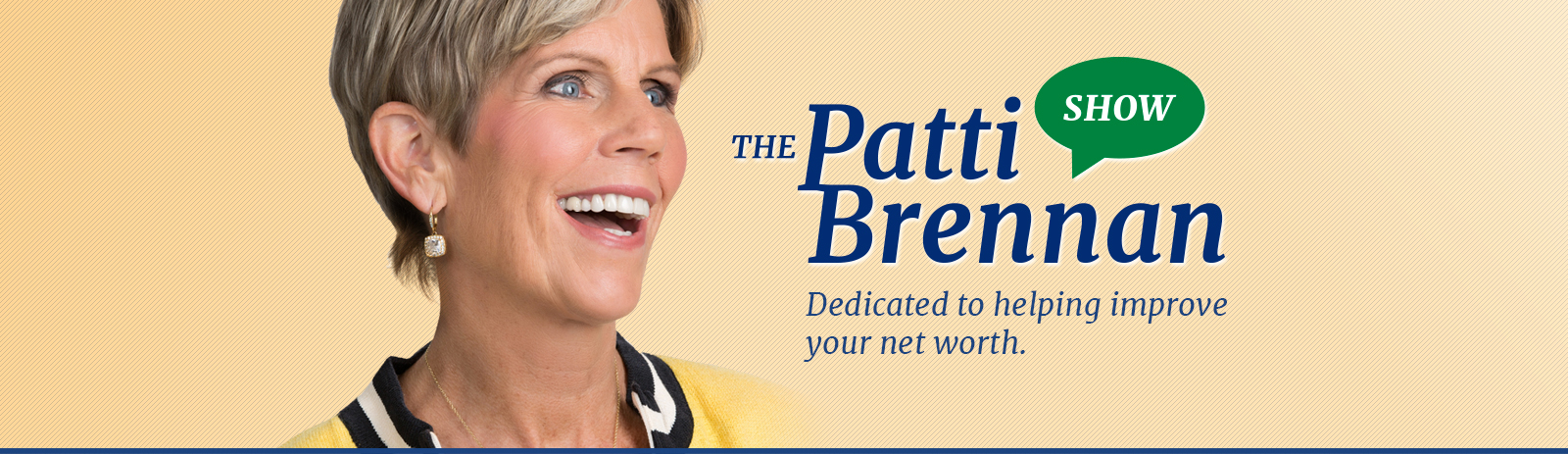
[00:23:11] Patti Brennan: You know, that’s what it is. I mean, we learn. And it doesn’t have to be perfect. Right? Just start. For me, and I’m just going to say from my perspective and my experience, we don’t have the Patti Brennan Show as a prospecting tool. It’s really a tool to educate our clients. It just so happens that it’s now being shared to hundreds of thousands of people and that’s awesome. One of the unintended benefits of having this podcast though, was that it’s really been a great way to develop my team. Because what’s happened is that we do a bunch of podcasts.
[00:23:56] Patti Brennan: I bunch ’em up, I’ll do four or five in a day, and we’re trying to come up with topics, right? And so invariably I’ll say, you know, I need to really understand this thing about the budget deficit, the federal deficit. So let’s do a podcast. You know, it’s the old Walt Whitman quote, if you really want to learn about something, write a book about it.
[00:24:19] Patti Brennan: But in my case, we do a podcast, and it really has been phenomenal. It’s allowed my team, 30 people, to do these podcasts with me. They do all the prep work, we practice it. I correct or I ask them to explore further. And here we are today. So that is to me the biggest benefit that we get out of it.
[00:24:43] Ryan Robertson: But you don’t use it as a marketing tool. You use it as an education tool for your clients, which I think is really interesting. Which I guess would lead me to, my next question is at this point in your career at Key Financial, how are you marketing? How do you bring clients into the fold?
[00:25:01] Patti Brennan: What’s so interesting about that is that, you know, we don’t really market per se. I think when it comes to this whole business, it’s either push or pull. I’m much more interested in pulling. Here we are, this is what we do. If you’re interested, give us a call. What’s wild about that is we continue to set records every single year for new money.
[00:25:26] Patti Brennan: I, as the CEO of this firm, only measure two things. Retention, we keep our promises. We take care of our clients; our retention is like 99.7%. It’s unheard of in the industry. That’s first and foremost. And then I measure new money. We can’t control the markets; we can’t control this. I don’t care about aum per se, although two billion, a pretty good number, right? Way beyond anything I had ever anticipated. What I care about is if we are doing a good job, the word will get around. And we set goals as a team. I don’t set the goals. They set the goals, and everybody participates here in the new money at the end of the year, and it’s a direct derivative of that new money.
[00:26:15] Patti Brennan: So last year the goal was $140 million of new money. What that would mean is that every individual who works at Key Financial, whether you’re the receptionist, whether you do scanning and filing, or you’re a CFA®, CFP®. We got a bunch of MBAs here. The whole bit, everybody gets a bonus. That is the exact same bonus. It is a derivative of that new money goal. What’s wild about that is last year, and I’m looking at a couple people here, I think our new money was almost $250 million, so everybody got a check.
[00:26:54] Ryan Robertson: Even where the market was down 20% and bonds were down 15%. So, $200 million in a year where, where the classic 64 had one of the worst years of all time.
[00:27:04] Patti Brennan: Thank you for saying that Ryan. That’s absolutely right. And I do believe that for those of you who are listening to this podcast, you advisors out there, if you understand that the most important time in your career are those times when things are not going well that you can really increase market share.
[00:27:24] Patti Brennan: That’s what I’ve learned over all these years, be out there.
[00:27:28] Kirsten Pickens: Absolutely. The other thing I just heard in everything that you articulated was just the complete alignment that you have with your team.
[00:27:33] Patti Brennan: We are all on the same team. It’s awesome. We have a ridiculous amount of fun here which I think you guys have witnessed. It’s so much fun. And what’s really interesting about that is on Friday at 5:00, nobody’s leaving. I have a refrigerator stocked with beer and wine and we’re sitting around and hanging out and laughing. It is really interesting. It’s just a lot of fun. We work hard, we care about each other. I think that if, for those of you who may be listening, who run a team, I think that that is perhaps the, maybe one thing I might have done right. And that is to really communicate the importance of the team, the culture. One year I basically said to everybody, you know, when you walk in, you want to be the reason your colleagues love coming to work, be the reason.
[00:28:31] Patti Brennan: And it’s so awesome. It doesn’t feel like work. I will tell you that that’s what I hear from so many of my colleagues here. They don’t work for me; I work for them. And my goal at Key Financial is to make sure this is the last job they ever have.
[00:28:53] Kirsten Pickens: Statement of a true great leader right there. And you know, you have a ping pong table too, so that’s fun. I mean, I might want to come back to single play, maybe a little tournament. Alright, well you have, you have addressed some of this already throughout the podcast, but Ryan and I like to close our podcast with one closing question, which is, what advice would you give your 20-year-old self?
[00:29:15] Patti Brennan: Hmm. Boy, that’s deep.
[00:29:19] Kirsten Pickens: I know, you could go a lot of ways with that one.
[00:29:20] Patti Brennan: Yes, you can. Okay, so you’re going to learn something about Patti Brennan right now, and the advice I would give to her would be don’t overthink stuff. Just go, keep putting one foot in front of the other. I’m reminded of a story about a track coach. And this track coach was talking to his very nervous high school pole vaulter and this poor kid’s shaking and he’s looking at this humongous pole vault and this vault setting a record for his high school. And he took that kid, looked him in the eyes, belly to belly, and he said, son, here’s what you’re going to do. You’re going to start and you’re going to start with a step. And then you’re going to take another step and then you’re going to run faster and faster and faster. And then when you get to that bar, here’s what I want you to do. I want you to throw your heart over the bar and your body will follow. And honest to goodness, Kirsten and Ryan, that is how I’ve lived my life.
[00:30:27] Patti Brennan: I throw my heart over the bar and my body just follows. Even as exhausted as it is, which I’m sure with three children each, there are days when you’re exhausted, you can do this. It’s a great industry. Keep moving forward. Don’t overthink. Get out there. And contribute.
[00:30:48] Ryan Robertson: Patti, this has been so fun.
[00:30:50] Ryan Robertson: It’s been educational and we just can’t thank you enough for being on Head to Head. Thank you so much.
[00:30:55] Patti Brennan: Ryan and Kirsten. This was so much fun. You made it easy for me.
[00:30:59] Kirsten Pickens: Well, thank you. You’re the pro, so this was great. Thank you.
[00:31:02] Patti Brennan: Excellent. Take care now.
[00:31:07] Ryan Robertson: Thank you so much to Patti Brennan for joining us on Head to Head.
[00:31:11] Ryan Robertson: To get the latest episodes as soon as they’re available, be sure to subscribe to the Fireside podcast.
[00:31:16] Kirsten Pickens: For more on this episode, visit www.fsinvestments.com/head-to-head. This episode was edited and engineered by Aaron Sherman. Special thanks to Show Coordinator Lara Coleman. Thanks for listening.